Gourmet grow kits and fresh mushrooms, handmade in north London

Visit the Shop
Scroll
100% natural substrate
Grown in my home lab
Made in Harringey
Small one-woman business

Growing Instructions

Follow these simple steps

When your grow kit arrives it is ready to fruit mushrooms. It can be kept in a cool, dark place for up to 3 weeks before you begin growing. See the FAQs section for more tips and tricks.

01

Clean

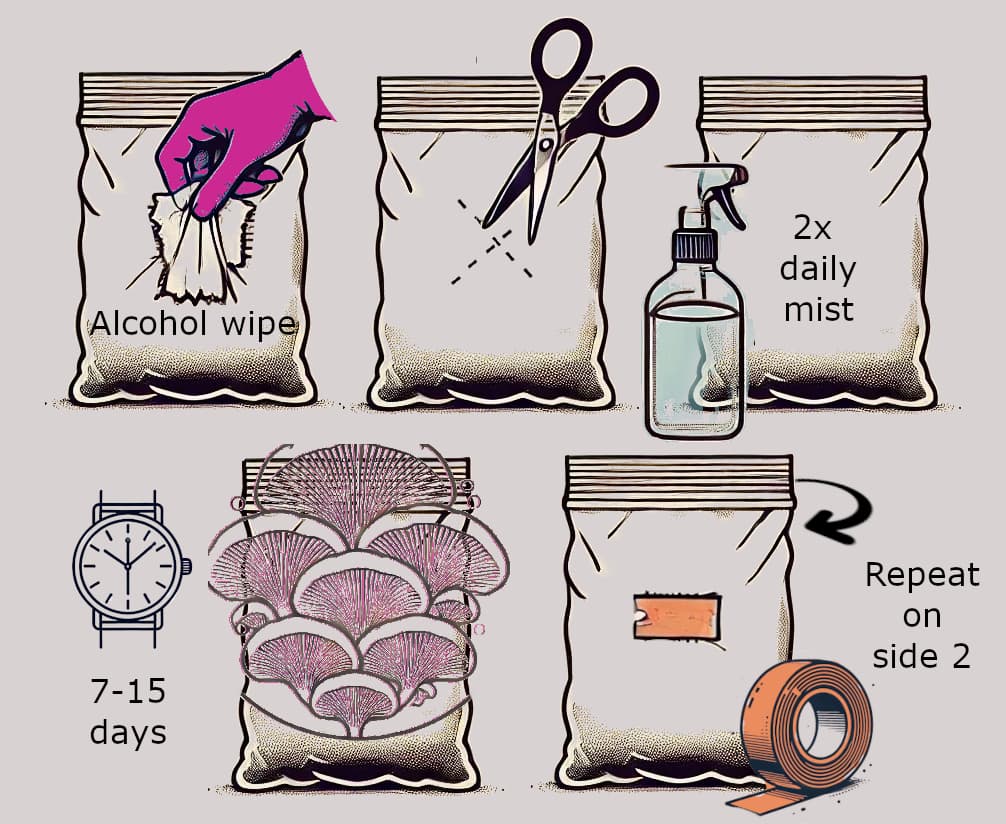
Using the alcohol wipe provided, clean the front of the bag as well as your knife/scissors.

02

Cut

Score a cross in the bag to expose the mycelium to fresh air.

03

Mist

Give 3 or 4 sprays to the front of the bag using the misting bottle provided. To maintain humidity, do this twice daily and continue once mushrooms appear.

04

Harvest

Watch tiny mushrooms (pins) develop over 7-15 days into full mushrooms. Harvest and enjoy! For a second harvest, tape over the cut bag and repeat the process on the other side of the bag.

Growing instructions diagram

What We Grow

Varieties available in our shop

Pink Oyster

Fast fruiting and vivid. Crisp up beautifully in a hot pan — a striking variety.

Shop Now

Golden Oyster

Delicate, fresh flavour with a bright yellow colour. Stunning clusters.

Shop Now

Lion's Mane

Shaggy, otherworldly appearance. Meaty texture with a mild, seafood-like taste. Very versatile in the kitchen.

Shop Now

Black Pearl King Oyster

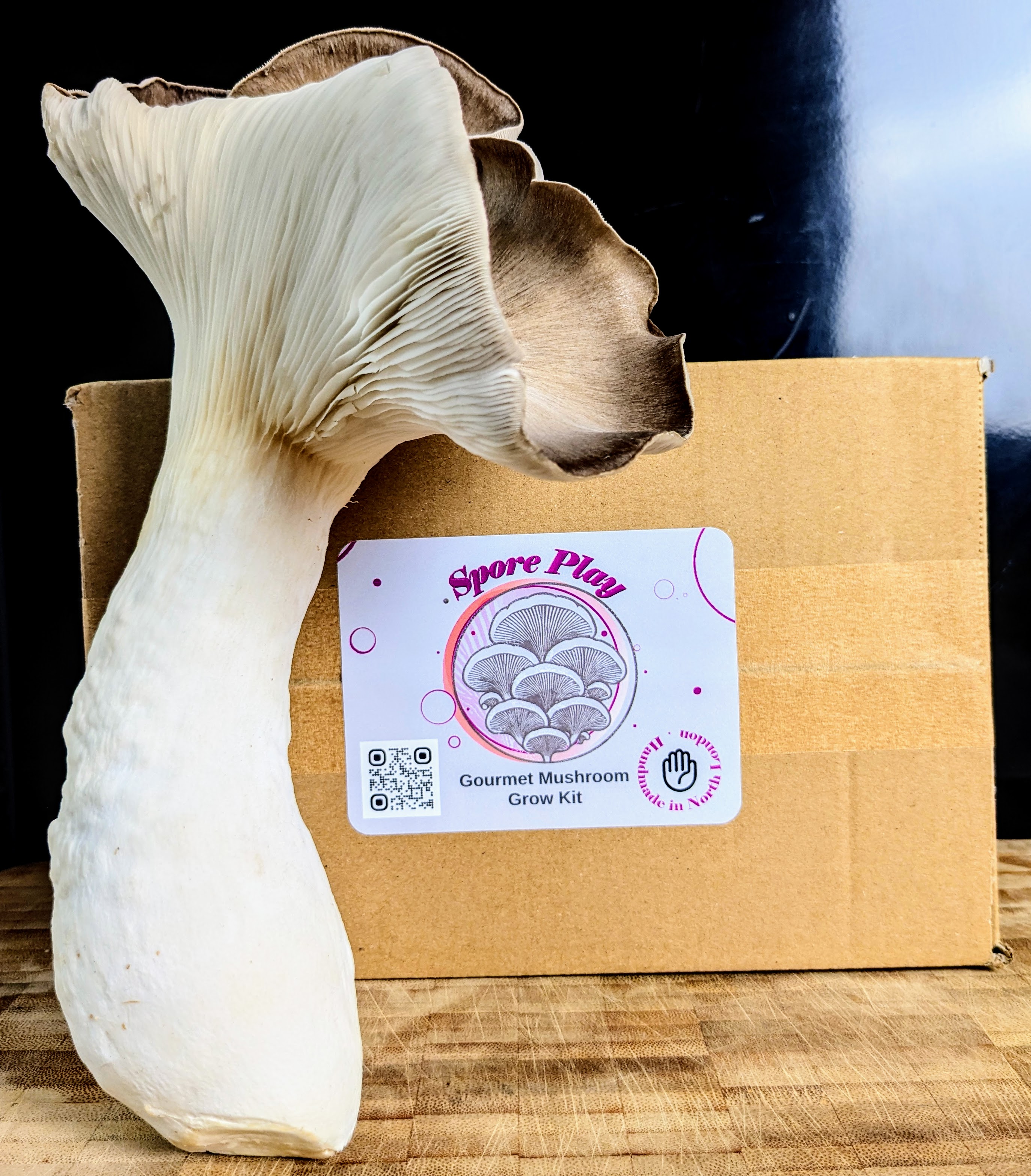
Thick, meaty stems that shred like pulled pork. The king of kitchen mushrooms. This variety is a hybrid between a king oyster and black pearl oyster so the caps are just as prized as the stems

Shop Now

Pearl oyster (grey oyster)

A choice classic oyster mushroom. These are very versatile in cooking. Use them in stir fries, pizzas, rissotto or my favourite - deep fried KFC style.

Shop Now

Elm Oyster

A pale white mushroom often confused with pearl oyster. This is the UK native Hypsizygus ulmarius. Interestingly not a type of oyster mushroom despite the name. The elm oyster is mildly flavoured and firm enough to hold together on a BBQ.

Shop Now

Speckled Chestnut

Gorgeous clusters of nutty, earthy mushrooms. When young they have a cute fluffy appearance.

Shop Now

Blue Oyster

A fast growing species that does well in the colder months. They begin with cool dark caps that lighten as they mature.

Shop Now

Recipes

Simple ideas to make the most of your harvest

Pink oyster bacon
Pink Oyster

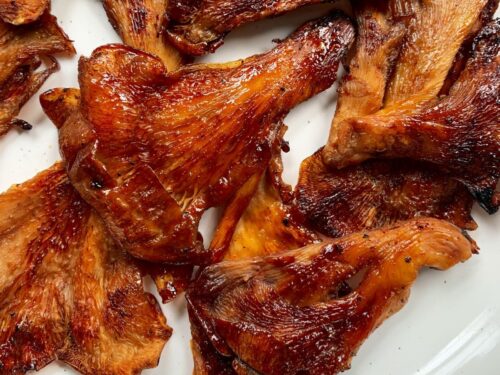
Oyster 'Bacon'

Plenty of fat and heat is key here. Go easy on the salt. Heat a good tablespoon of butter or ghee in a pan on medium heat. Add torn apart mushrooms. When mushrooms soften, add a pinch of salt and half a teaspoon of smoked paprika. Mushrooms are done when they are crispy and browned but there is still some softness in the middle. Add these to anything and everything but I like them on eggs, avo toast, or great thrown in last minute to vegetarian carbonara.
Pulled king oyster
King Oyster

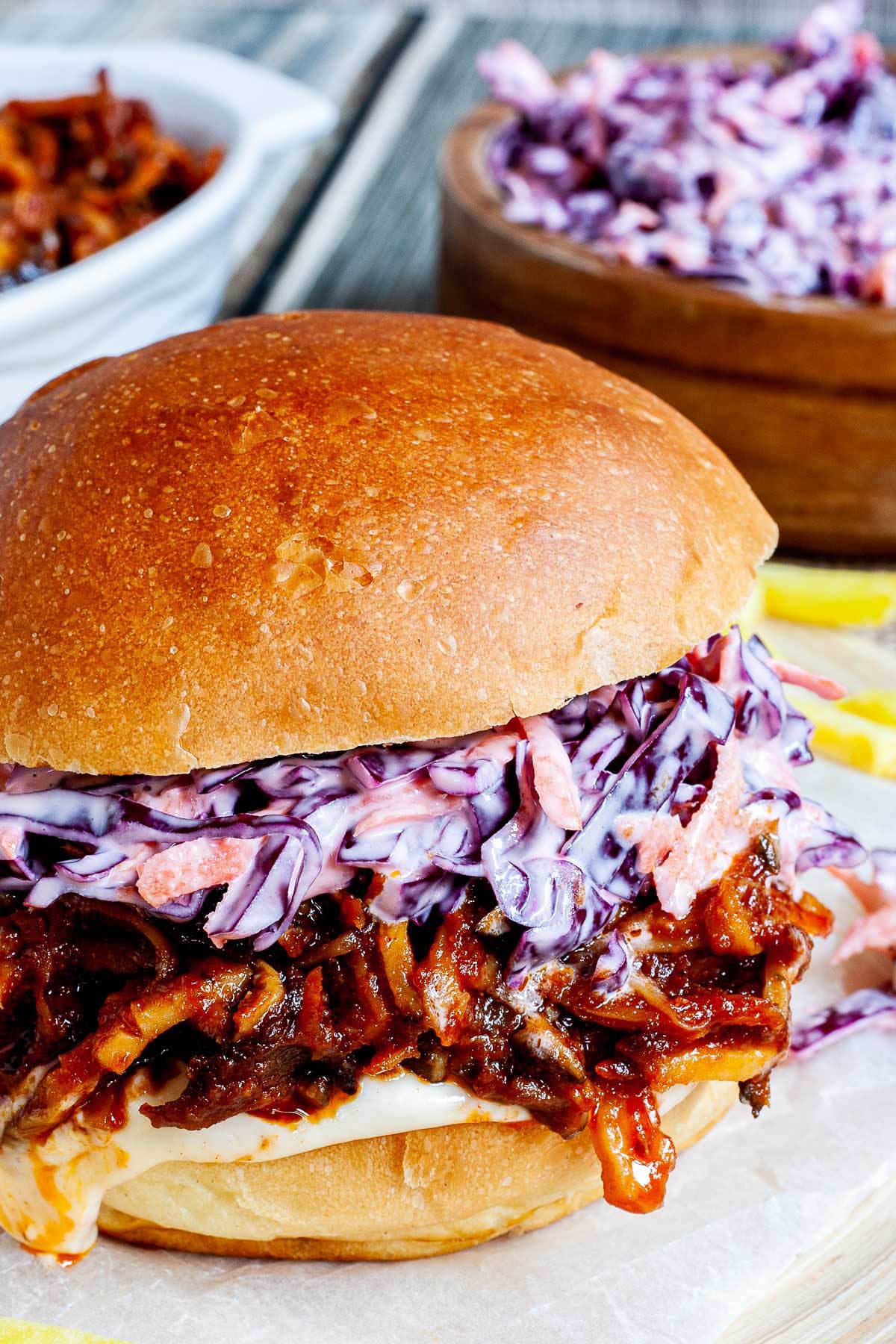
Pulled King Oyster

A mushroom version of pulled pork. Take a fork and tear your king oyster stems into rough strips. Fry your strips in oil in a large pan so that there is plenty of space for the mushrooms without being crowded. Add your favourite BBQ sauce and half a teaspoon of smoked paprika or chipotle powder if you prefer a spicier version. Spread your mushrooms out onto some greaseproof paper and oven bake until the sugars have caramelised and the edges are crisp. Load up a toasted burger bun along with your favourite toppings.

What's the Story?

How your kit is made

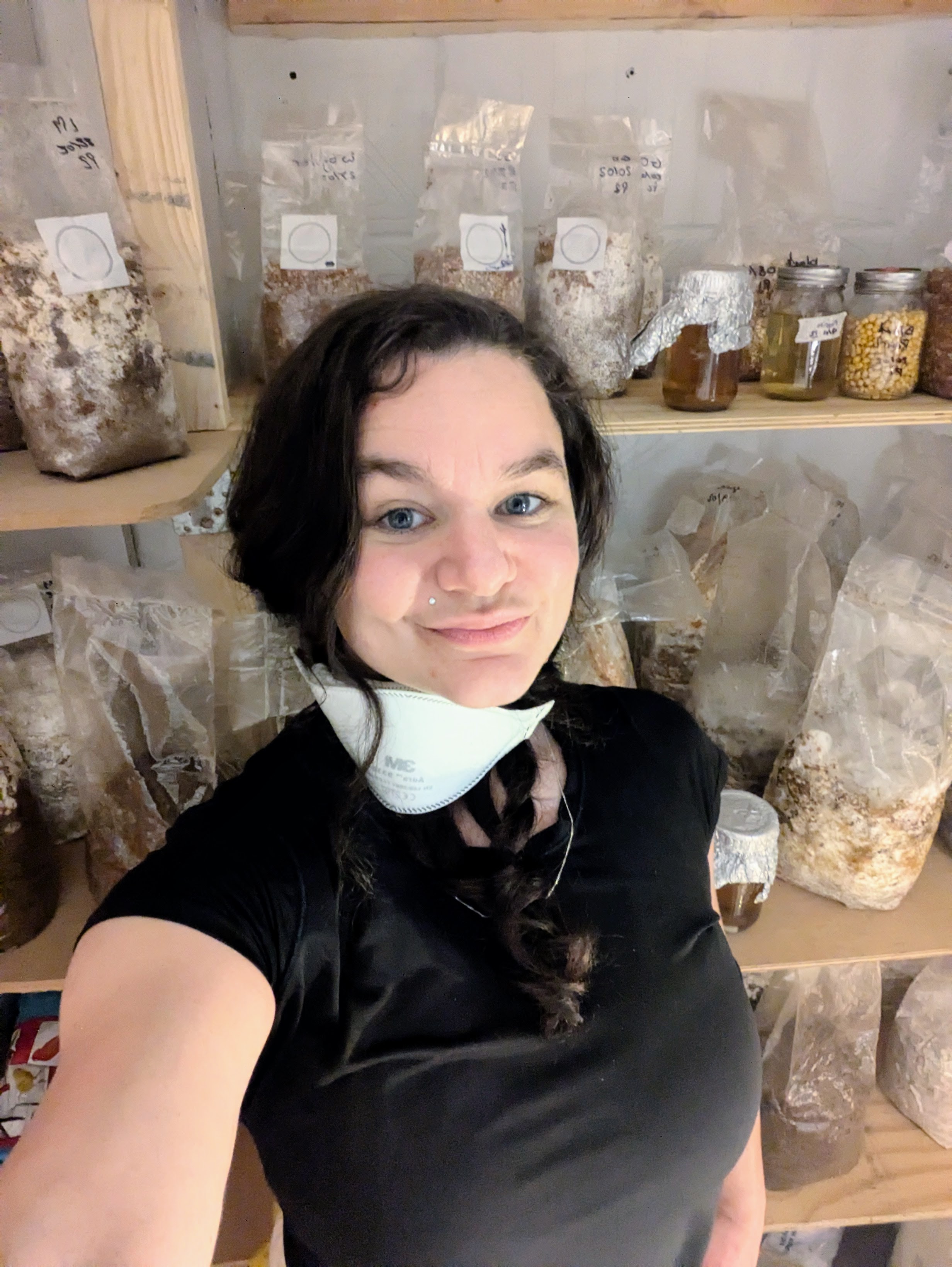
Hi I'm Rachel! I suppose my mushroom growing hobby has gone into overdrive. If you are already growing or foraging mushrooms then you will know exactly what I'm talking about. I'm now on a mission to bring more people into the same rabbit hole that I went down. Beautiful, nutritious gourmet mushrooms shouldn't only be found in luxuary restaurants. By growing them at home you can have the freshest, most interesting varieties in a matter of days, grown and harvested with your own hands. There is nothing quite like watching those first few tiny pins getting bigger everday. Your grow kit is made specially by me in my home lab in Harringey, London. I'm also experimenting with mycelium materials so watch this space for some growing art and perhaps some sound/heat insulation panels!

Rachel with mushroom shelves
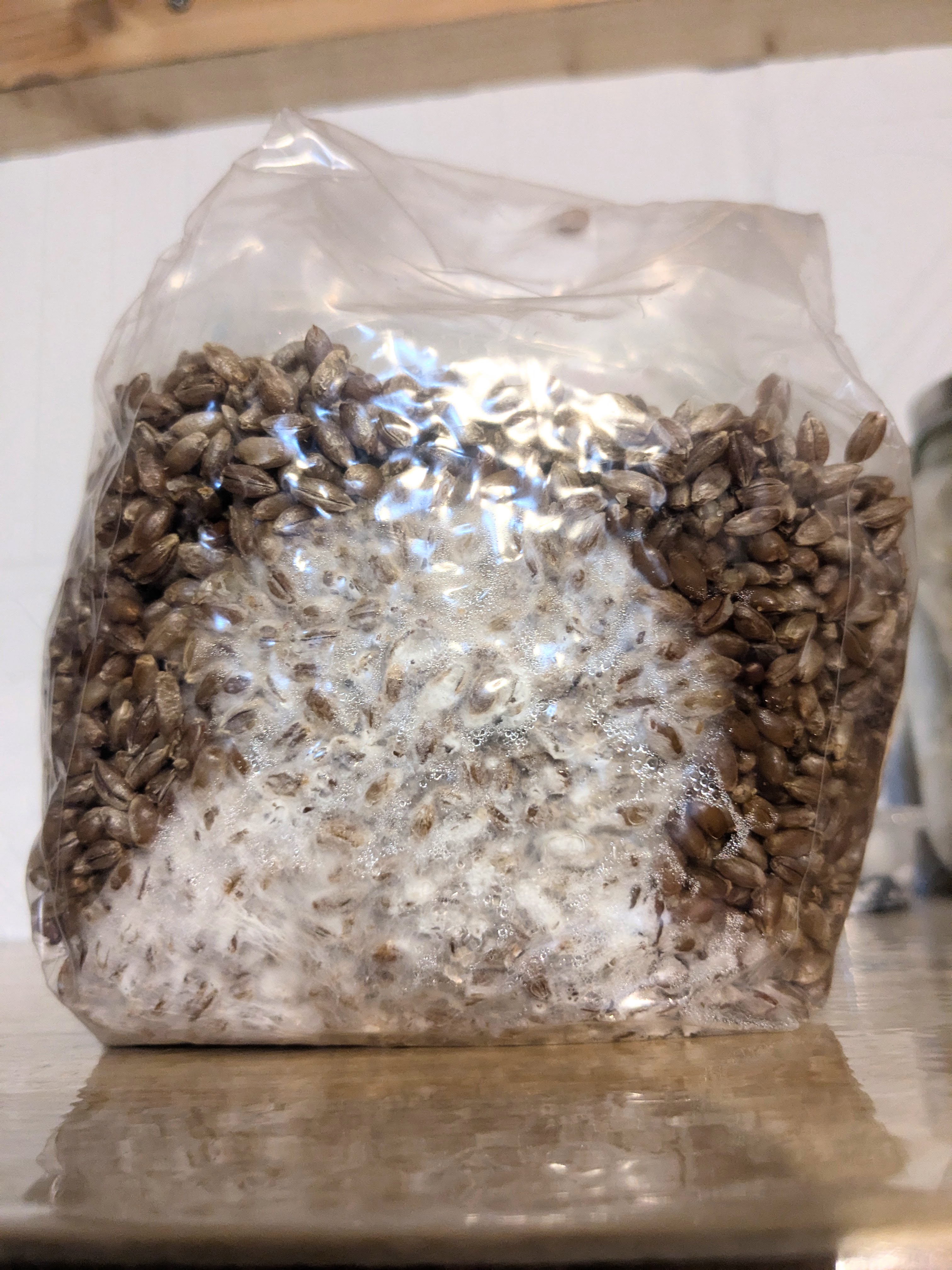
Substrate bags colonising

Your grow kit contains a substrate mix which has been fully colonised with mushroom mycelium. The mycelium is the main body of the fungus and the mushroom is the fruit. The mycelium at this stage is much more robust than the earlier stages of development. Your fungus has been happily munching away on sterile organic rye grain and then a mixture of wood/straw and soy bean hulls with a little gypsum for pH balance and nutrients.

When you cut into the plastic bag your fungus will be exposed to light and fresh air as well as hopefully some mist if you are being kind to it. This will kick start the fruiting process and mushrooms will start to 'pin'. Over a few days you will see these tiny pins develop into little mushrooms, and then bigger mushrooms!

Don't forget to take some snaps of your beautiful mushrooms before they go in the pan! I love to see your photos so please tag me @sporeplaymushrooms on Instagram or send to me directly. Mush love.

Mushrooms growing on bag

Mushroom Facts

The fungal kingdom is strange and fascinating!

01

Mushrooms Can Break Down Plastic

A plastic bottle was found in the Amazon rainforest, Ecuador in 2011 having been partly eaten by a fungus. Some fungi can digest plastic in marine environments and without oxygen. While not all plastics are digestible, these fungi are being studied for their potential to combat pollution and could be used in low-oxygen land-fill sites.

02

They Can Be Turned Into Packaging, Insulation & Clothing

Mycelium is used as a sustainable material for creating eco-friendly packaging, leather-like fabrics and it is even being used as an insulation material for housing. Several people have created mycelium-material kayacks, making use of its hydrophobic property.

03

There Are Over 14,000 Known Species

New species are being discovered every year, and many are still unidentified. Fungal genetics and reproduction are particularly bizzare. For example, they can integrate genetics from other species and quickly develop new traits that we would expect to evolve over millions of years via natural selection.

04

Fungi Have Inspired Medicine Beyond Penicillin

The immunosuppressant drug cyclosporine, derived from fungi, revolutionized organ transplants by preventing rejection.

05

Trees and Fungi Have a Symbiotic Relationship

Mycorhysal fungi benefit from the sugars in tree roots thanks to photosynthesis. Trees in turn benefit from nutrients like nitrogen and phosphorus from fungi. The fungus also acts to extend the trees' root system and even open a line of communication with other trees.

06

Beatrix Potter was a mycologist

Best known for her children's books such as the tale of Peter Rabbit, Beatrix Potter was also a passionate mycologist. She contributed hundreds of detailed botanical illustrations, and made scientific contributions to the extent that she was permitted to at the time.

Let's work together

Chefs, shops & artists — I'd Love to Hear From You

Whether you're a local restaurant looking for a reliable supply of fresh gourmet mushrooms, a food stall wanting something unusual on the menu, or an artist excited by the aesthetics of mycelium — Spore Play is open to collaboration.

I'm passionate about connecting people with fungi through food, art, and community in north London and beyond.

Get in Touch

Frequently Asked Questions

-

Your mushrooms need light, fresh air and humidity. A kitchen, bathroom or living room is ideal. Avoid the window ledge if you can. They don't need that much light and they could dry out if it's sunny. Mushrooms excrete CO₂ and need oxygen so avoid keeping them in a small space such as a cupboard. Humidity needs will be covered by a couple of squirts of mist on the cut bag twice a day.

Pink Oyster: Best to harvest before spores start to drop. They are a little too mature when the edges curl upwards and the pink colour has faded.

Lion's Mane: Harvest when the spines are noticeable but still firm. The spines will be around 3–4 cm long. The body should be firm and white. When lion's mane is getting too mature it will yellow and become less firm to the touch.

King Oyster: Harvest when the stems are thick and the cap is fully formed but still has a domed shape. Bigger mushrooms that have opened caps will be a bit more chewy.

General advice: Handle the mushrooms gently to avoid bruising. Remove any bits of mushroom tissue left on the grow bag. To get a better 2nd flush of mushrooms, harvest them as soon as they are ready and avoid over-mature mushrooms which have started dropping spores. This will give you a stronger harvest the 2nd time around.

After a couple of good harvests you can break up your substrate and use it as a nutritious compost. You may even get mushrooms growing outside! For this reason it is best to keep spent pink and golden oyster indoors as these are the only non-native fungi that I sell. While I take care to minise the use of single use-plastic in production, unfortunately the bag is not recycleable. It is possible to grow from reusable buckets. However, there is a danger that these will also be single use in reality. If you would prefer this option then please get in touch!

Contact

Feedback, questions? Drop a note!

Ready to start growing?

Visit the Shop